Services · The screens on the wall
PicturesOn a pipeline
Stable Diffusion and ComfyUI wired into the place where your content actually gets made, with a model fine-tuned so everything comes out looking like you.
- ComfyUI
- Stable Diffusion
- LoRA
- ControlNet
- Flux
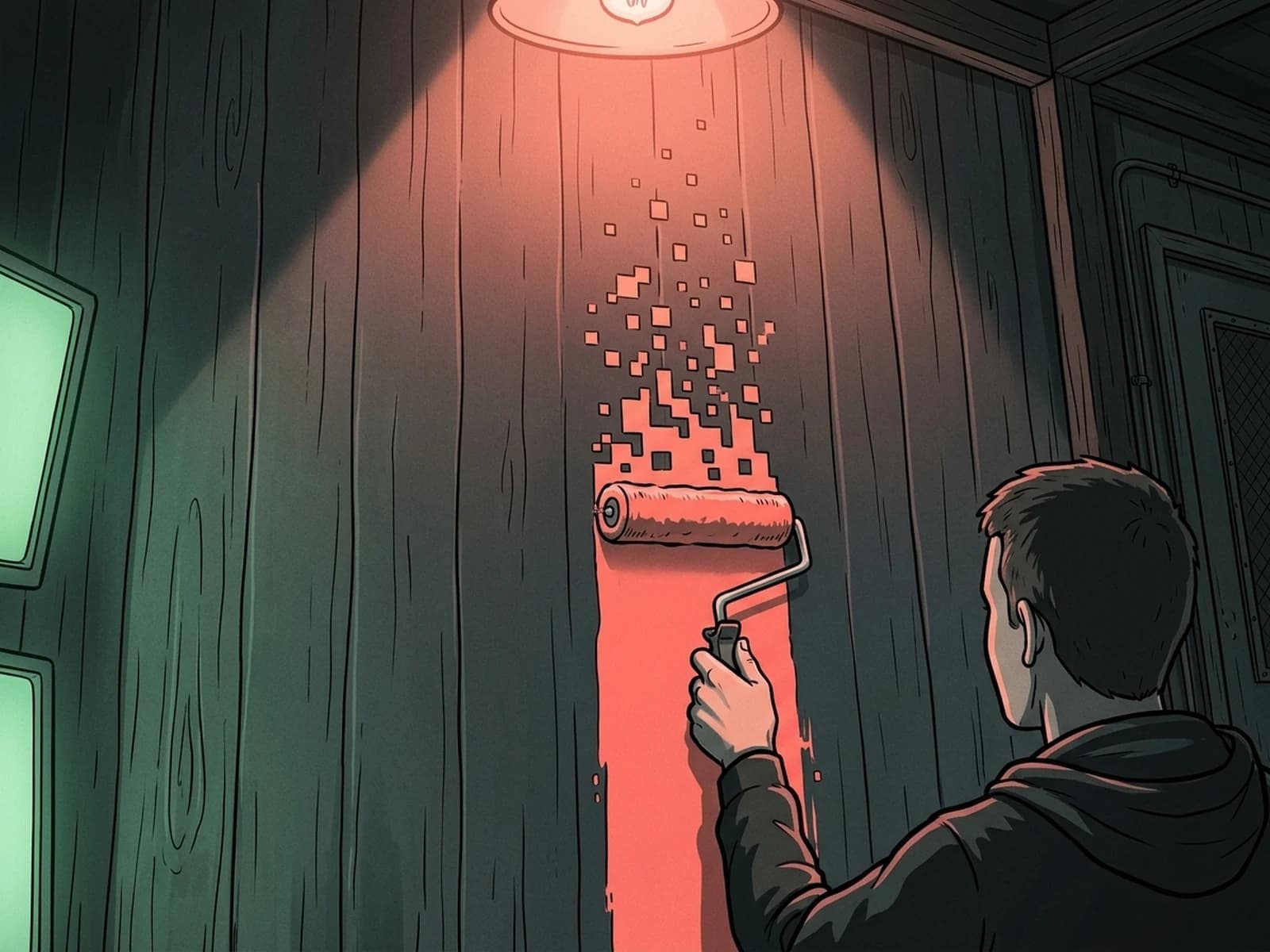
The room you are standing in was made this way: one master painting generated, then cut into layers, with a small LoRA keeping every prop in the same hand. That is the same pipeline we build for product shots, campaign variants, and illustration systems. The interesting part is not the prompt, it is the consistency and the batch run at three in the morning.
What you get
- A ComfyUI graph that produces your look reliably, not once in twenty tries
- A LoRA trained on your brand, with the training set documented
- Batch running and post-processing: background removal, sizing, export presets
- A written prompt book so your team can run it without us
How it goes
 01 · Lock the look
Twenty or thirty frames until one style is unmistakably yours. This is the part that decides everything after it.
 02 · Train
A small LoRA on the best of those frames, with a trigger word, so every later image inherits the look.
 03 · Wire the pipeline
Graph, batch runner, post-processing, and the export sizes your channels actually need.
 04 · Document
A prompt book with what works, what fails, and the exact settings.
What changes
One house style
Fifty images that look like they came from the same illustrator, because effectively they did.
Cost per image collapses
The expensive part becomes deciding what to make, not making it.
It runs on your hardware
Self-hosted if you want it. No per-seat fee, no terms change next quarter.
Work from this bench
Straight answers
- Can it match our existing brand illustrations?
- Usually yes, if you have twelve or more examples in a consistent style. That is roughly the minimum for a useful LoRA.
- Is the output ours to use commercially?
- With self-hosted open models and a LoRA trained on your own material, yes. We will flag anything in the chain that complicates that.
- Will it replace our illustrator?
- It replaces the twentieth variation of an image they already drew. The first one still needs a person with taste.
- Will the output actually look like our brand?
- That is what the training step is for. A handful of consistent reference images produces an adapter that holds a look across a whole set, which prompting alone does not do reliably once you need more than one picture that matches.
- Who owns what comes out?
- You do, and the pipeline runs on hardware you control, so nothing is uploaded to a service with its own terms about your material. That is the main operational reason for using open-weight models rather than a hosted API.
- Can we run it ourselves afterwards?
- Yes. The pipeline is an explicit graph, not a prompt somebody keeps in their head — it can be saved, handed over, and run again next year to produce the same output. That reproducibility is the whole reason to build it this way.
All services
Tell us the problem in plain words.Book the intro call